Self-rescheduling that respects everyone’s time
NEW: Candidate self-rescheduling directly in Workable

As a hiring manager, this scenario is probably familiar: A carefully crafted interview invitation goes out to a promising candidate. The slot works perfectly with the team’s schedules. Then, just hours before the interview, an email arrives: “I’m so sorry, but something has come up. Can we reschedule?”
What follows is the familiar dance. Multiple emails back and forth, calendar checks, coordination with other interviewers, and finally, days later, a new time is set. At the same time, that strong candidate could start questioning whether the company really lives up to its image as a modern, people-first organization.
Our latest scheduling improvements eliminate this friction entirely.
Why half of all interview invites go nowhere
Here’s a statistic that might surprise you: on average, only 50% of interview requests actually turn into booked meetings.
So if a company receives 200 applications and invites 40 candidates to interview, only about 20 of those interviews will end up on the calendar, meaning half of those opportunities are lost before the conversation even begins.
Why does this happen? The data tells an interesting story. More than 10,000 candidates received multiple scheduling requests while at the same stage of the hiring process. This wasn’t due to recruiter oversight,but often the result of rigid scheduling workflows. When a candidate needed to reschedule, the only option was to generate a brand-new scheduling link and start the process again.
The impact adds up quickly: candidates feel friction at a critical moment, recruiters spend extra time coordinating logistics, and some interviews never get finalized.
What good candidate experience really means
Research across industries shows one theme consistently: the best candidate experiences are built on respect and autonomy.
When candidates can manage their own schedules, just like they would for any other professional meeting, they feel trusted and valued. When they’re forced into rigid, one-way communication flows, it feels like they’re being processed rather than partnered with.
How our candidate self-rescheduling works
Here’s what’s new:
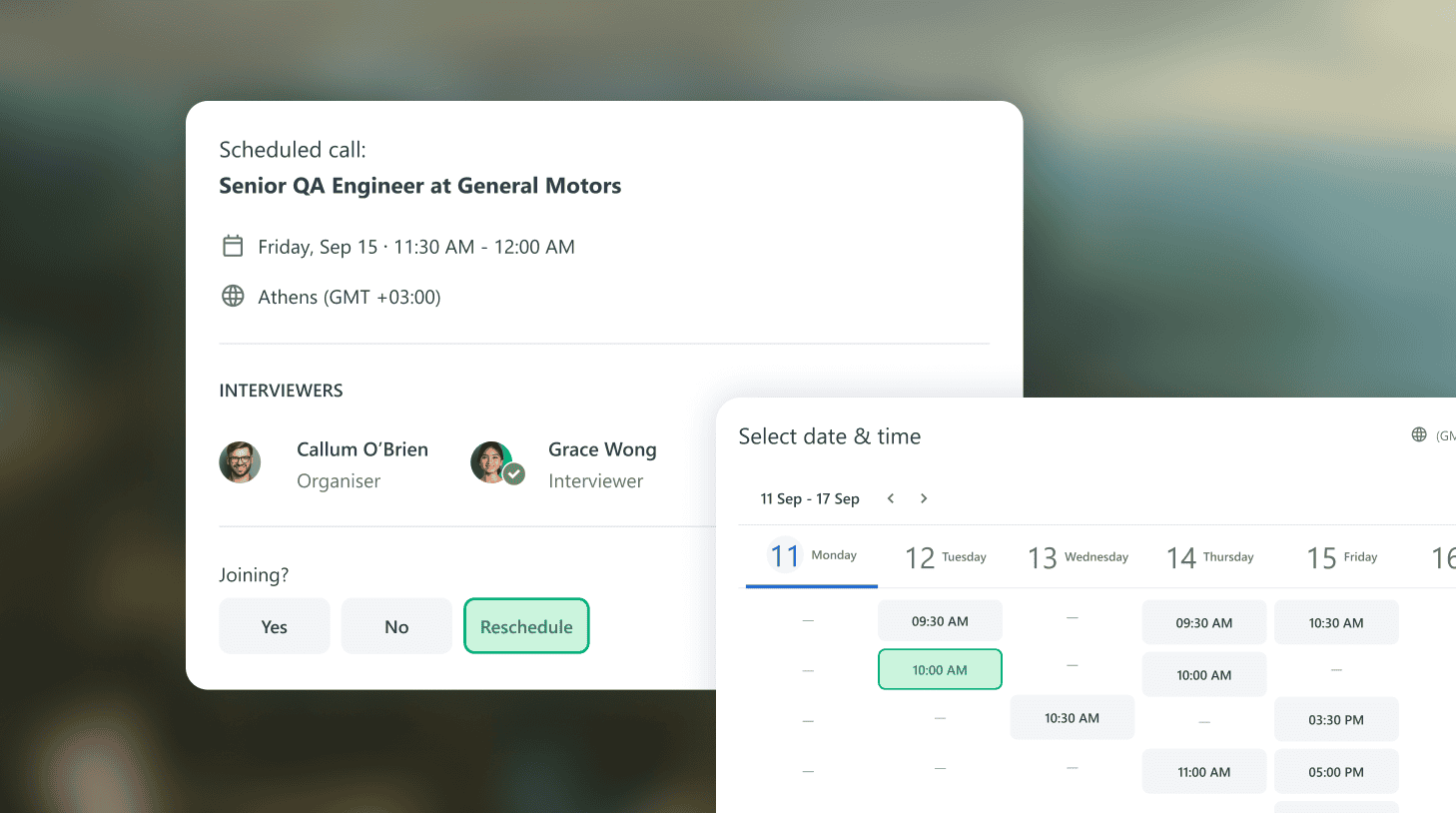
Candidates can now reschedule their interviews with one click. No email threads. No waiting for a response. No wondering if they’ve inconvenienced anyone. They simply choose a new time from the same available slots originally provided.
This feature includes guardrails that protect both candidate experience and team efficiency:
- Candidates must provide a reason for rescheduling. This isn’t about creating barriers. It’s about maintaining the professional context that helps teams evaluate cultural fit and communication skills.
- Hiring managers control whether rescheduling is allowed. For certain critical interviews, this feature can be disabled to maintain full control.
- The available time slots remain the same. Candidates can only choose from the times that work for the team, ensuring no scheduling conflicts arise.
- Automatic notifications keep everyone informed. Teams know immediately when an event has been rescheduled, with full context about why.
8 additional improvements we’ve made
While candidate self-rescheduling is the headline feature, seven other pain points have been addressed based on feedback from hiring teams:
- Share scheduling links anywhere
Candidates communicate via LinkedIn, WhatsApp, and text messages. Scheduling links can now be copied and shared through whatever channel works best, without being forced to send them through the platform first. - 24-hour interview reminders
No-shows waste everyone’s time. Automated email reminders sent 24 hours before each interview have proven to dramatically reduce missed interviews across platforms. - Smarter RSVP options
“Maybe” has been removed as a response option (because you wouldn’t want someone who’s afraid of commitment, right?”), and “No” responses automatically free up calendar time. - Forward replies to the right people
Ever sent an interview email, only to have the candidate’s “running 5 minutes late” message go into a void? All candidates reply now forward to their actual email addresses, ensuring real-time communication works. - Proper event cancellations
When candidates or team members cancel, everyone’s calendar gets updated properly. No more phantom meetings blocking productive time. - Interview-per-day limits
For high-volume screening scenarios, teams can now cap the number of self-scheduled interviews allowed per day, preventing burnout and maintaining interview quality. - Meeting rooms in self-scheduled events
Whether optional or mandatory, physical or virtual meeting rooms now integrate seamlessly with self-scheduled interviews, just like they do with regular events. - Custom available slots
For teams managing multiple interviewers across time zones, specific time slots can now be defined rather than relying solely on calendar availability calculations.
What this means for you
These improvements aren’t just about convenience. They’re about fundamentally shifting the power dynamic in recruiting.
For candidates, it means being treated like the professionals they are. They can manage their schedules, communicate changes clearly, and experience companies as flexible and respectful from day one.
For hiring teams, it means dramatically less administrative overhead. No more email ping-pong. No more manual calendar updates. No more hunting down why that promising candidate ghosted the interview.
For hiring metrics, it means faster time-to-fill, higher show rates, and better candidate satisfaction scores. All measurable improvements that make a real business impact.
Why this actually matters
The traditional recruiting model put all the power on one side of the table. Companies dictated when and how interviews happened. Candidates were expected to bend their schedules to fit.
But the modern talent market doesn’t work that way anymore. The best candidates have options. They’re evaluating companies as much as companies are evaluating them. Every interaction shapes their perception of company culture.
When candidates get the autonomy to manage their interview schedules, it sends a clear message: their time is respected, they’re trusted to be professional, and people deserve to be treated well from the very first interaction.
That’s not just good recruiting. That’s good business.
How to get started
Self-rescheduling is now available to all customers using Google or Microsoft Calendar integrations. The rollout requires no disruption to existing workflows. Current scheduling links remain active, and teams can adopt the new functionality at their own pace.
These updates were shaped by feedback from hiring teams and are designed to reduce friction in the interview process. There’s always more to improve, and scheduling remains an area where small changes can make a meaningful difference.
Thoughtful hiring technology should remove obstacles, not create them. When scheduling works smoothly, teams can focus less on coordination and more on having the right conversations with the right candidates.
_______________________
Ready to give candidates more control over their interview experience? Explore the new scheduling features or reach out to learn how they can fit into your hiring workflow.